A Very Limited Biography of an Unknown Artist
By Joseph Filocomo
Stefan Achilles is an unknown artist. He never sold any of his work. It was simply too personal to share with the public. There’s scant information on him, with the exception of some public records and a few letters to his friend, the sculptor, Philip Pavia. Stefan was born in Bridgeport, CT in 1905, a booming industrial center whose factories attracted immigrant workers from around the world. Like his father, he worked for Coulter & McKenzie, a company that specialized in industrial machinery. Both of his parents were born in poverty stricken southern Italy and immigrated to the United States in search of the American dream. Stefan married a local librarian in 1946 and moved to neighboring Milford, a beachfront community, where he died 1990.
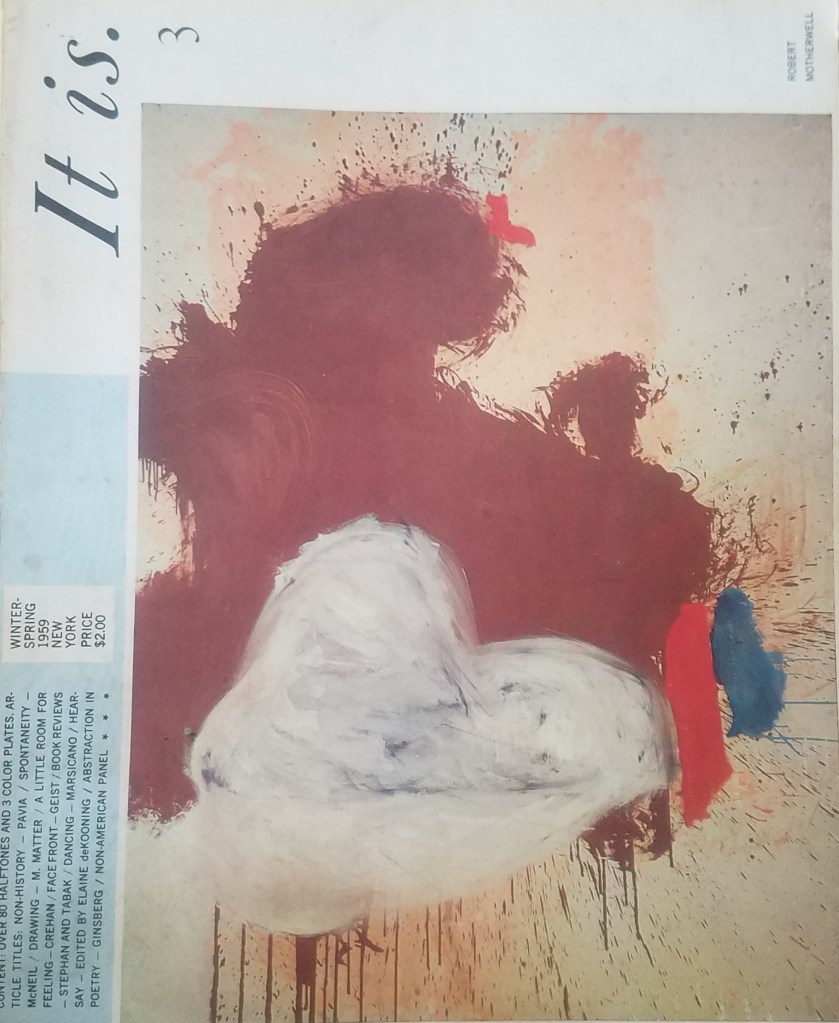
He was a factory worker whose real passion in life was art. His story is similar to that of the photographer Vivian Maier, a full time nanny whose obsession was street photography. She never published or sold her work, as well. She left thousands of photos and negatives to luckily be discovered after here death. They were both fiercely private artists who hoarded their output for dear life. Stefan’s work was recently resurrected from a garage. It probably hadn’t seen the light of day since the artist neatly stacked it in boxes decades ago. Along with his art was a copy of It Is Magazine from 1959, one piece of stationary with his name and address,and a legal size Coulter & McKennzie envelope. Out of the thousands of paintings (all on paper of various sizes), only two were signed (one Stefan, the other Achilles). His intention was, it seems, that they should never be seen.
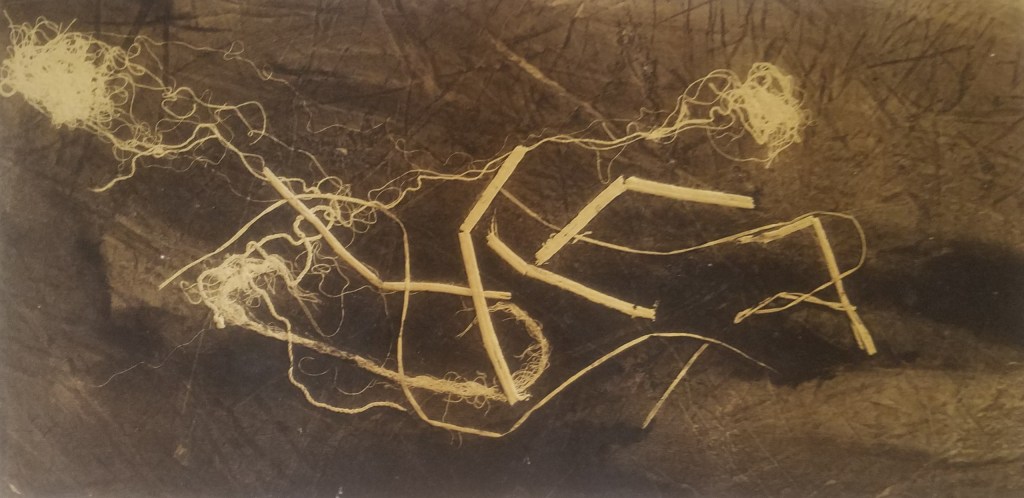
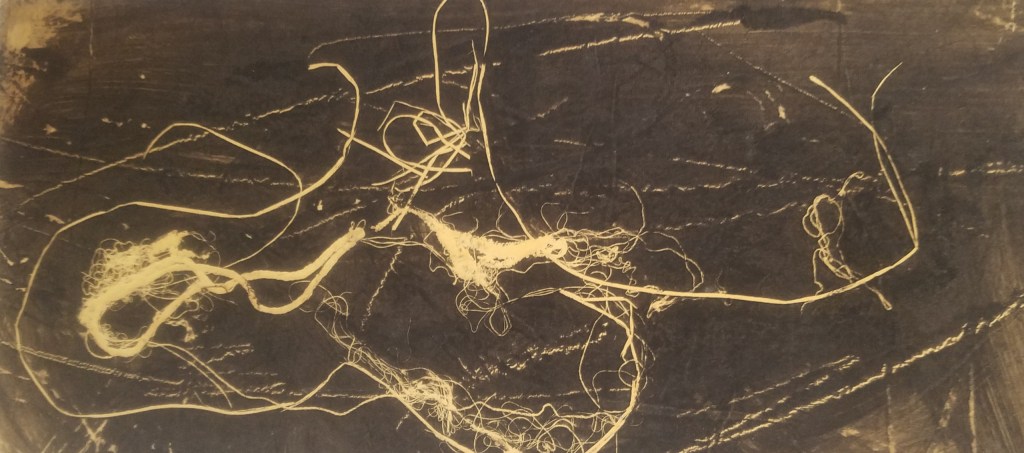
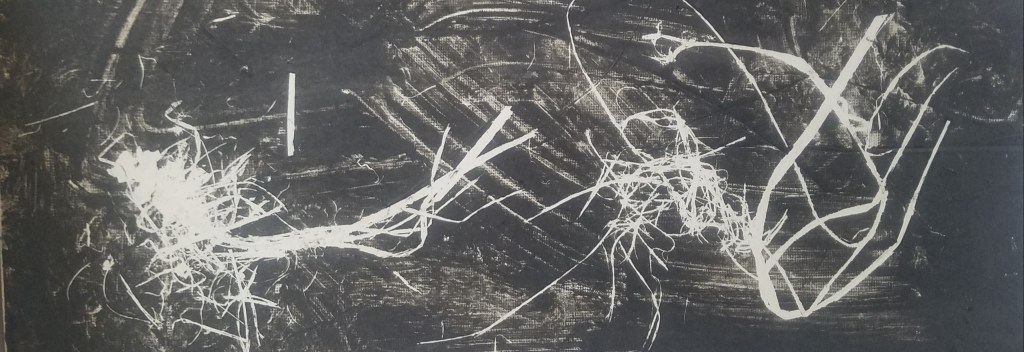
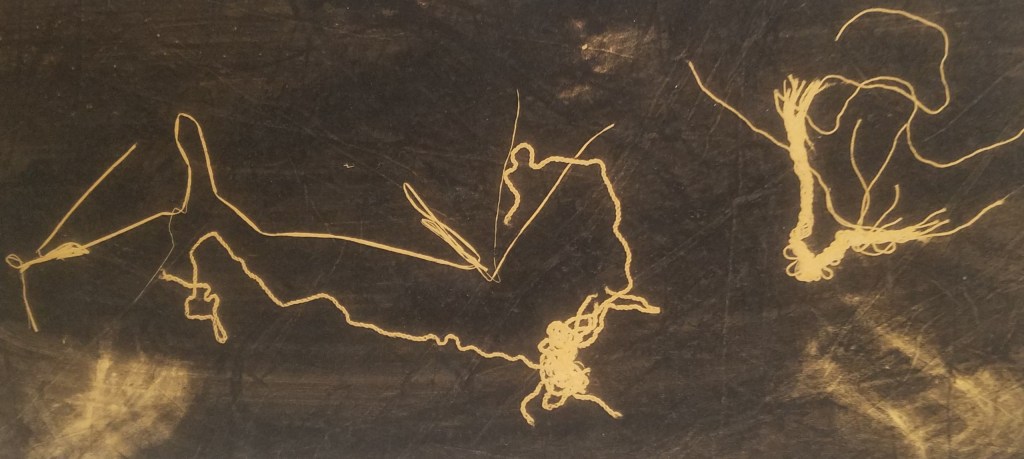
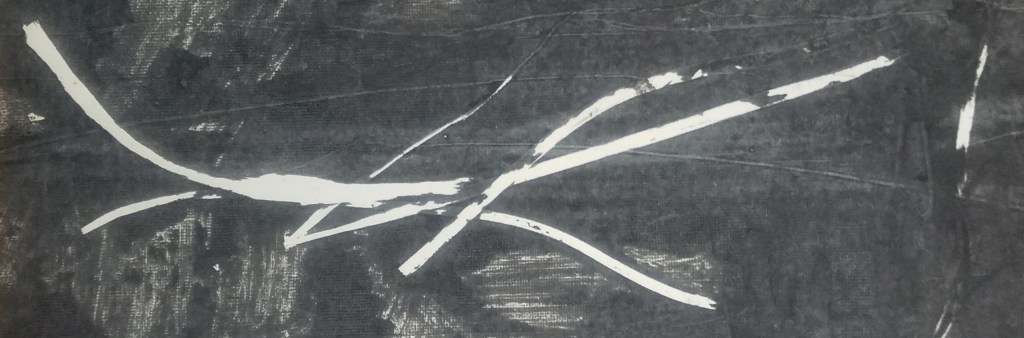
Stefan was an abstract expressionist from the very birth of this new, revolutionary and audacious art style in 50’s. His work was spontaneous, experimental, and nonrepresentational, that is, no recognizable images (he did, however, paint a series of nudes and rather ghostly abstract faces). Stefan’s preferred medium was ink and paper, unlike most other members of this school who preferred oil and large canvases. He also experimented with lithography, not a common medium among abstract expressionists. Stefan worked feverishly, probably on his kitchen table, after a long days work. Sometimes, he even left a trail of inky fingerprints behind.Also, on occasion, he would scribble a thought on the margins of his work. One poignant example is: “we who are dead will never cease to love you.”In another work, he scribbled: “perche?” (why?, in Italian).
Philip Pavia and Stefan Achilles were lifelong friends from Bridgeport. Pavia, in 1948, founded The Club, a community of rather poor artists and writers who met regularly in a dingy flat in the Village on East 8th street to discuss art, philosophy, religion, and life. Some of the early members included: Willem de Kooning, Franz Kline, Milton Resnick, and Landes Lewitin, to name a few. The Club became the vanguard of this strange, iconoclastic art movement that desperately sought legitimacy among collectors, galleries, museums, and the New York art establishment as a whole. Stefan, was not an active member of The Club; however, he went there ocassionally, sometimes with his friend Yayoi Kusama. He preferred the safety of job and home over the unpredictable Bohemian lifestyle of a Greenwich Village renegade. Stefan had his pulse on the New York abstract art movement, though, through Pavia, who encouraged him to put black ink aside for a while and experiment with color paints on paper. He was also friends with writer and poet Emanuel Navaretta, an early member of The Club, and friend also from Bridgeport. Stefan’s letters to Pavia, part of the Philip Pavia and Natalie Edgar Archive at Emory University, show Stefan and Navaretta encouraging Pavia in his struggle against skeptical art critics, especially, the influential Dore Ashton.
The only time that Stefan allowed any of his works to be released to the public was when two ink paintings appeared in It Is Magazine in 1959 (see below). This was the only magazine dedicated, at the time, to abstract expressionism. The founder and guiding light was Philip Pavia, until it ceased publication in 1965. Stefan’s work appeared alongside that of Sam Francis, Motherwell, and the de Koonings. The index on the last page simply described him as “a painter from Connecticut”. This was the first and last time the work of this enigmatic artist was seen, until now.
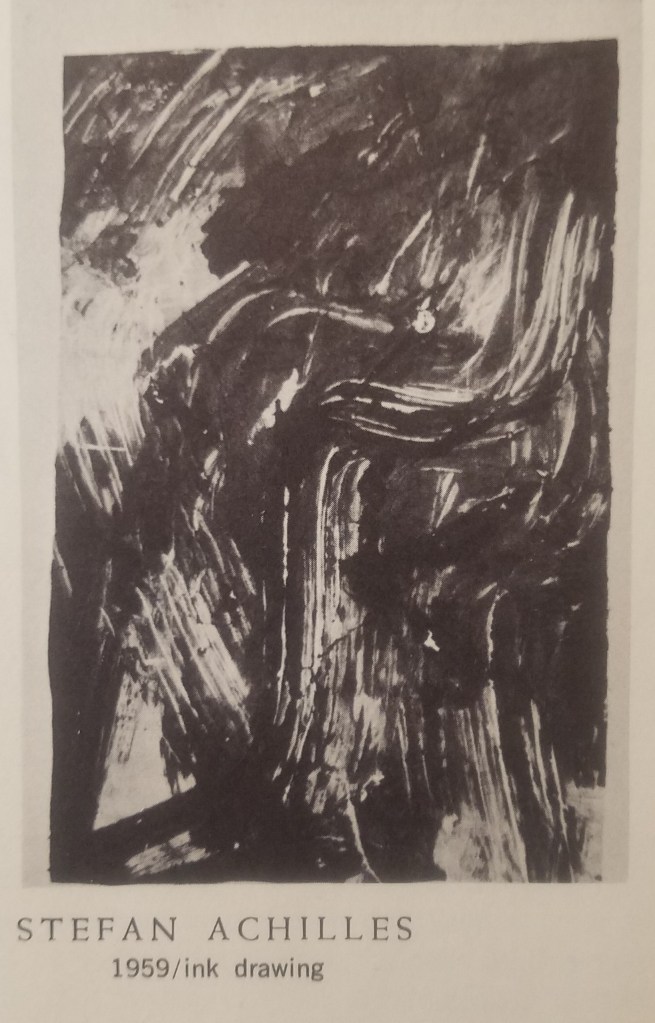
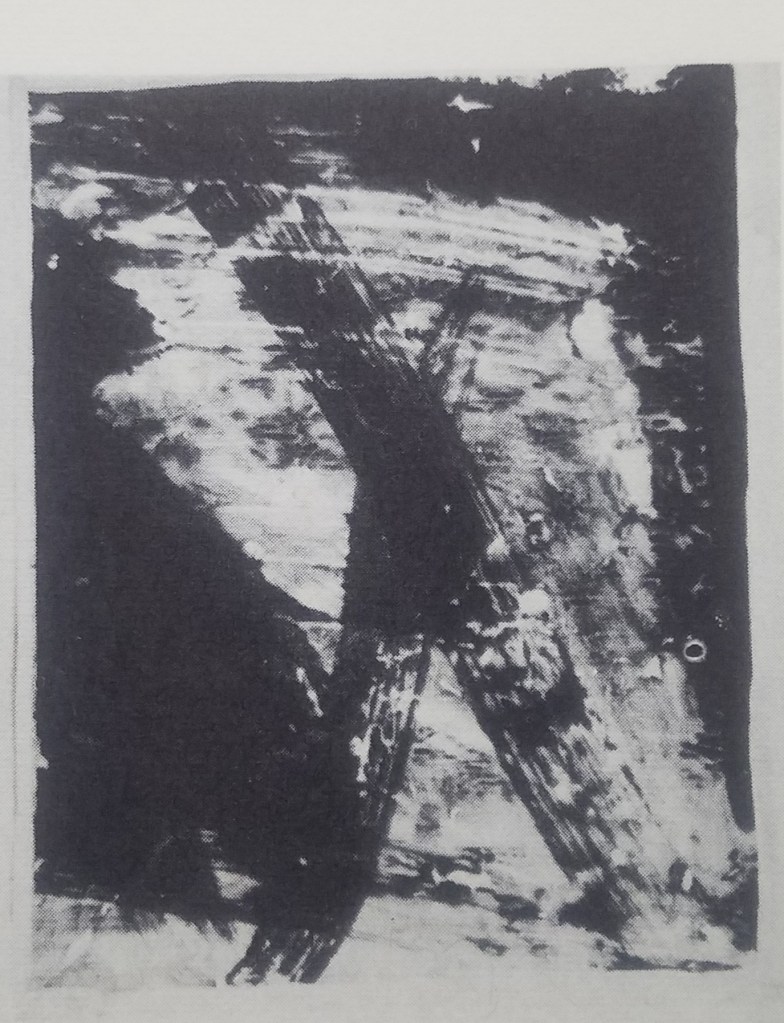

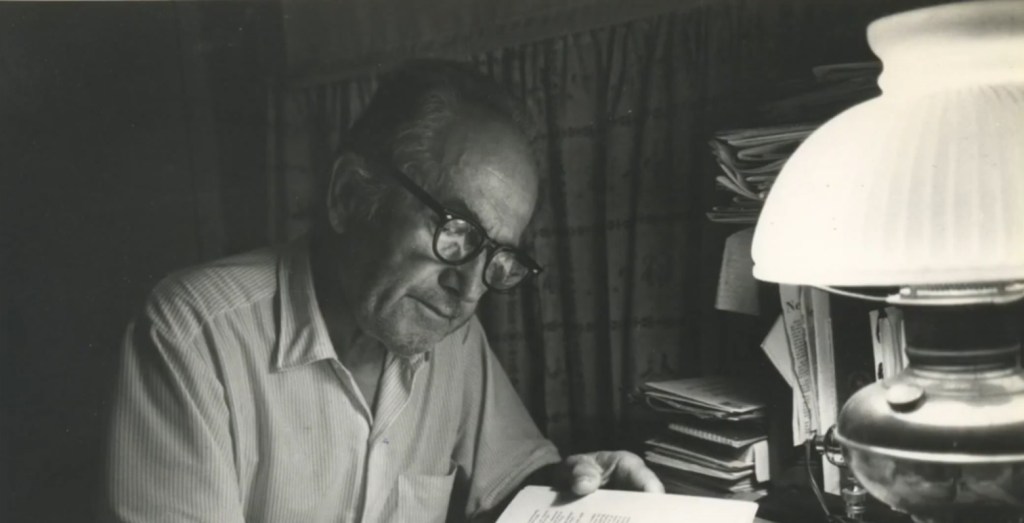
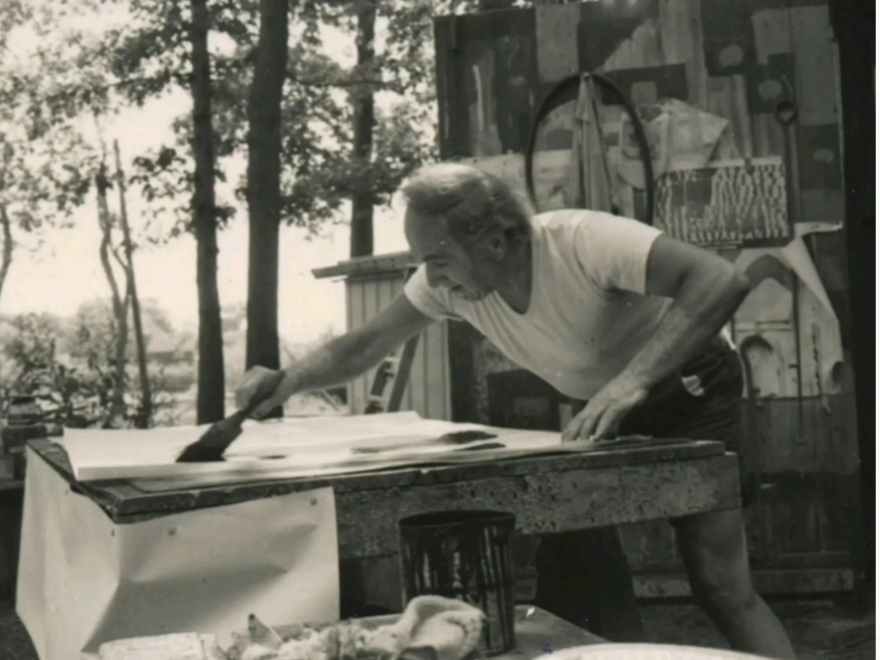
 Stefan Achilles (1905-1990)
Please contact me as he was my friend and mentor since I meet him in about 1959 until his death. I have many hours of taped visits to his house in Milford. I meet him through Al Kelley. I continue to review my history with him, I was there when he and his sisters were disposing of his house. I have many old photos.
LikeLike
Hello Tom: Yes, I would love to speak to you about Stefan. I was stunned when I read your message. Please call Joe at….
LikeLike
I own a house in Roxbury CT that was owned by the artist David Hare. MANY artists visited the house including Stefan Achilles – I just learned today by the estate of David Hare.
Achilles visited as did David’s neighbor Alexander Calder, Peggy Guggenheim, Yves Tanguy and Kay Sage (his cousin), Andre Breton, Jacqueline Lamba, Jean Paul Sartre, Delores Vanetti (his GF) Arshille Gorky, Julien Levy, Andre Masson, Ibram Lassaw, William Baziotes, Philip Guston and more….
Where are you based?
Glenn Gissler
gg@gissler.com
LikeLike
Greetings Glenn, You must be speaking to Michael Harrison of the Hare Estate. I’m the owner and archivist of the Stefan Achilles Collection, based in Brooklyn NY. Please feel free to follow Achilles on Instagram and communicate with me as well. I will do the same.
Best,
Joseph Filocomo
LikeLike